
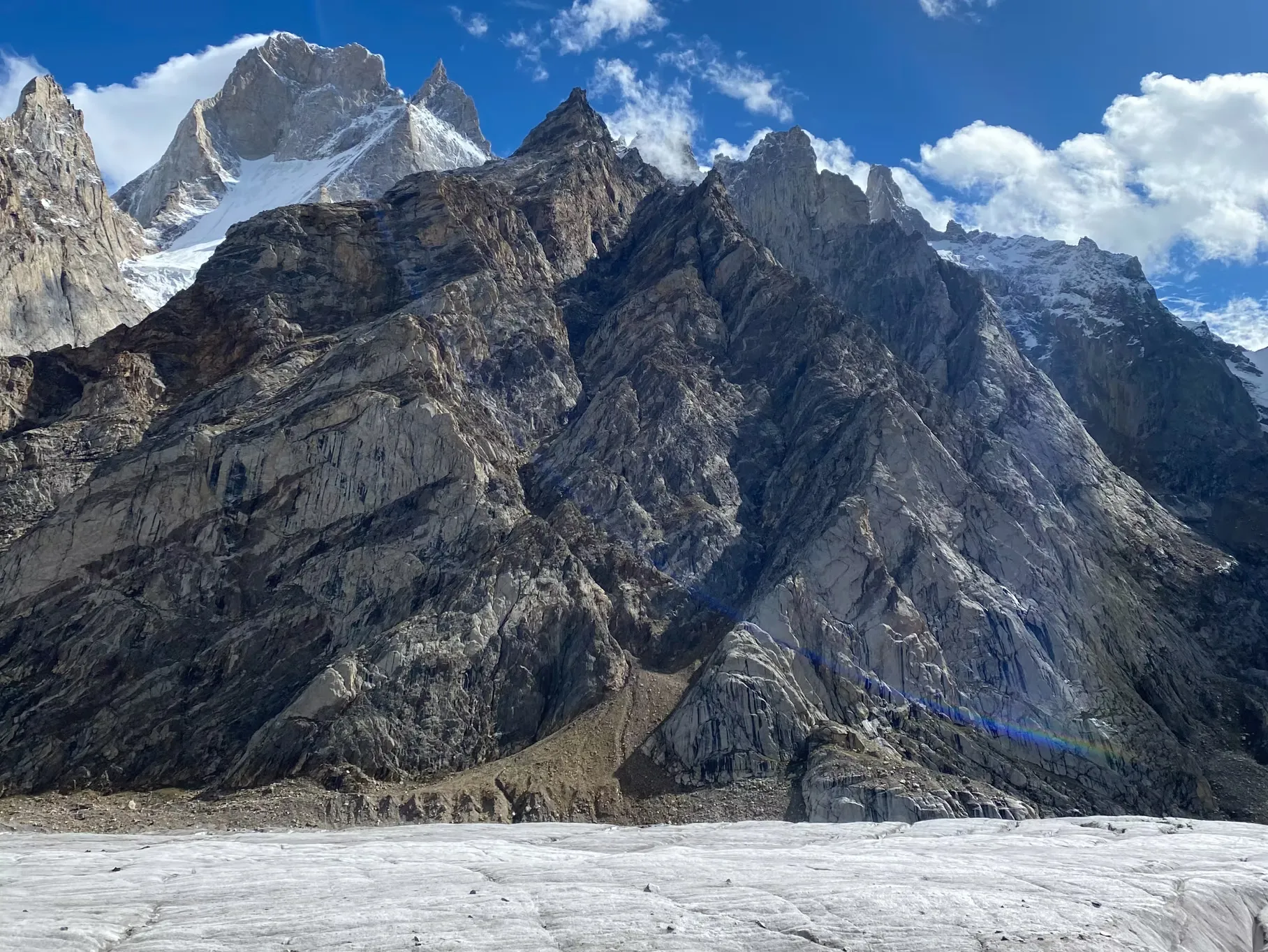
The great mountain ranges of Asia, the Karakoram and the Himalayas, are home to the world’s highest peaks and most spectacular trekking routes. For any serious adventurer, a journey into these realms of ice and rock is a lifelong dream. But while they may seem similar, the Karakoram and the Himalayas offer vastly different trekking experiences. In this article, Moving Mountains breaks down the key differences between Karakoram Trekking and Himalayan trekking to help you choose the adventure that is right for you.

Geological and Geographical Distinctions
Though often spoken of in the same breath, the Karakoram and the Himalayas are distinct mountain ranges with unique geological characteristics that shape the trekking experience.
The Raw, Jagged Peaks of the Karakoram
The Karakoram is a younger, more rugged range, characterized by its sharp, jagged peaks and vast glacial systems. Geologically, it is a complex and active region, with some of the most dramatic mountain architecture on the planet. It is home to K2, the world’s second-highest mountain, and a dense concentration of 7,000 and 8,000-meter peaks, including four of the world’s fourteen 8000ers in close proximity. The mountains here rise from a higher base altitude, creating a landscape that feels more consistently high and wild. The scenery is stark and dramatic, a world of rock and ice on an epic scale, with glaciers like the Baltoro and Biafo carving immense valleys through the heart of the range.
The Diverse Landscapes of the Himalayas
The Himalayas, on the other hand, are an older and more extensive range, stretching across five countries: Nepal, Bhutan, India, China (Tibet), and Pakistan. They offer a greater diversity of landscapes, from lush subtropical forests and terraced fields in the foothills to the high, arid deserts of the Tibetan plateau. The base altitudes are generally lower, allowing for a more gradual acclimatization process, which is a significant advantage for trekkers. The Himalayas are home to Mount Everest and ten of the world’s fourteen 8,000-meter peaks, but they are more spread out than in the Karakoram, creating a different sense of scale and grandeur.
The Trekking Experience: Remoteness vs. Accessibility
The most significant difference between trekking in the Karakoram and the Himalayas lies in the level of development and accessibility.
The Untouched Wilderness of the Karakoram
Karakoram Trekking is a journey into true wilderness. The region is far more remote and less developed than the popular trekking areas of the Himalayas. This means fewer trekkers, quieter trails, and a sense of solitude that is hard to find elsewhere.
The trekking here is expedition-style, with camping being the primary mode of accommodation. This self-sufficient approach, where all supplies are carried by porters or pack animals, adds to the sense of adventure and allows for a deeper immersion in the natural environment. It harks back to the golden age of mountaineering exploration and offers a more authentic wilderness experience.
The Well-Trod Trails of the Himalayas
The Himalayas, particularly in Nepal, have a well-established trekking infrastructure. The popular routes, such as the Everest Base Camp trek, are lined with teahouses and lodges, offering a level of comfort and convenience that is not found in the Karakoram. This ‘teahouse trekking’ culture allows for a lighter pack and a more social experience, with opportunities to meet fellow trekkers from around the world. This makes Himalayan trekking more accessible to a broader range of trekkers, from beginners to seasoned experts. However, it also means that the trails can be crowded, especially during the peak seasons, which can detract from the sense of wilderness for some.
The Best Time to Go: Contrasting Trekking Seasons
Choosing the right time to trek is crucial in both ranges, but the optimal seasons are quite different.
The Short, Intense Summer of the Karakoram
The best time to go Karakoram is during the short summer season, from June to August. This is when the weather is most stable, the skies are clear, and the high passes are free of snow. The Karakoram is largely shielded from the monsoon that affects the Himalayas, making summer the ideal time for trekking. This weather window is a key differentiator, as the Himalayas are generally not suitable for trekking during these months. July is the peak month for treks like the K2 Base Camp Trek1, offering the best chance of clear views and stable conditions.
The Spring and Autumn Seasons of the Himalayas
The best time to trek in the Himalayas is during the pre-monsoon (spring) and post-monsoon (autumn) seasons. Spring (March to May) offers blooming rhododendrons and warmer temperatures, creating a vibrant and colourful landscape. Autumn (September to November) provides clear skies, stable weather, and excellent mountain views, making it the most popular trekking season. The monsoon season (June to August) brings heavy rain to most of the Himalayas, making trekking difficult and often dangerous due to landslides and leeches.
Difficulty and Demands: A Test of Endurance
Both ranges offer treks of varying difficulty, but in general, Karakoram Trekking is considered more challenging.
The High-Altitude Challenge of the Karakoram
The treks in the Karakoram are typically longer, more remote, and at a higher average altitude. The terrain is more rugged, with extensive glacier travel and challenging high pass crossings, such as the Gondogoro La. This demands a higher level of physical fitness and previous high-altitude trekking experience. A trek in the Karakoram is a true expedition, requiring self-sufficiency, a high degree of resilience, and a spirit of adventure.
A Spectrum of Difficulty in the Himalayas
The Himalayas offer a wider range of trekking options, from gentle lodge-to-lodge treks in the Annapurna foothills to demanding climbs of 6,000-meter peaks like Mera Peak or Island Peak. This allows trekkers to choose an adventure that matches their experience and fitness level. While there are certainly challenging treks in the Himalayas that rival the difficulty of those in the Karakoram, there are also many options for those who are new to high-altitude trekking, making it a more inclusive destination.
A Tale of Two Treks: A Comparative Overview
To illustrate the differences, let’s compare two iconic treks: the K2 Base Camp Trek in the Karakoram and the Everest Base Camp Trek in the Himalayas.
| Feature | K2 Base Camp Trek (Karakoram) | Everest Base Camp Trek (Himalayas) |
| Duration | 20-22 days | 12-14 days |
| Accommodation | Camping | Teahouses/Lodges |
| Remoteness | Extremely remote, few other trekkers | Popular route, can be crowded |
| Scenery | Stark, dramatic, dominated by rock and ice | Varied, from forests to high-altitude desert |
| Difficulty | Very challenging, requires high fitness and experience | Challenging, but accessible to fit beginners |
| Best Season | June – August | March – May & September – November |
Your Adventure, Your Choice with Moving Mountains
Ultimately, the choice between Karakoram Trekking and Himalayan trekking comes down to what you are looking for in an adventure. If you crave solitude, raw wilderness, and the challenge of a true expedition, the Karakoram is calling. It is an experience that will test your limits and reward you with a profound sense of accomplishment. If you prefer a more accessible trek with a rich cultural tapestry, a vibrant social scene, and a wider range of options, the Himalayas may be the better choice. It offers a more comfortable and convenient way to experience the majesty of the world’s highest mountains.
At Moving Mountains, we specialize in crafting unforgettable trekking experiences in both the Karakoram and the Himalayas. Our expert guides, meticulous planning, and unwavering commitment to safety ensure that you can embark on your dream adventure with confidence. We understand the unique challenges and rewards of each region and can help you choose the perfect trek to match your ambitions. Whether you are drawn to the rugged beauty of Trekking in Gilgit Baltistan or the iconic trails of the Everest region, we are here to help you make it happen. Contact us today to start planning your next great adventure.